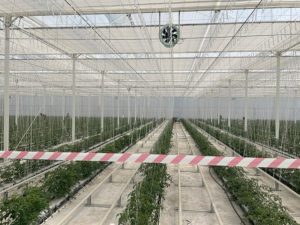
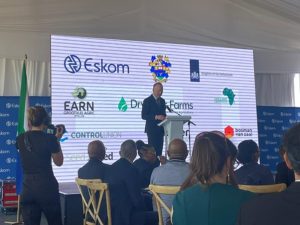
The Mpumalanga Green Cluster Agency (MGCA) attended the official launch of the Climate Smart Horticulture Centre in Grootvlei, Mpumalanga, on 27 January 2026. The event was hosted by Eskom, in partnership with the Netherlands Embassy in South Africa, marking an important milestone in collaborative climate-responsive development.
The establishment of the Centre represents a two-year journey, from initial conceptualisation to implementation. Designed as a catalytic initiative, the Centre aims to strengthen collaboration between government, the private sector, local municipalities, and surrounding communities. Its focus is on building a resilient, inclusive, and sustainable horticulture sector that can support economic diversification in a region undergoing transition.
The Netherlands is the world’s second-largest agricultural exporter, globally recognised for innovation in agricultural production, processing, and trade. As a member of the European Union and a signatory to the Paris Agreement, the Netherlands has committed to reducing greenhouse gas emissions by at least 55% by 2030, compared to 1990 levels.
Adopted in December 2015 and entering into force in November 2016, the Paris Agreement is a legally binding international treaty on climate change. Its central objective is to limit global temperature increases to well below 2°C while pursuing efforts to restrict warming to 1.5°C above pre-industrial levels. The agreement remains a cornerstone of global climate action and just transition efforts.
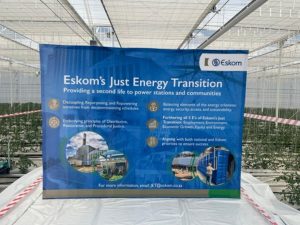
The partnership between Eskom and the Netherlands government aligns strongly with these commitments and underscores a shared approach to a just energy transition. Beyond climate objectives, the initiative places a clear emphasis on community-centered development, delivering practical benefits such as skills development, training, access to funding, and improved market access. These interventions are intended to enable local producers to supply both major South African retailers and local supermarkets, ensuring tangible and inclusive economic impact.
In a recent interview with Channel Africa, Roald Lapperre, vice minister of agriculture of the Netherlands, highlighted several reasons for selecting Mpumalanga as the site for the project. Central among these was job creation, particularly in communities surrounding the power plant. He noted that creating employment opportunities carries “extra value” in the region, while also strengthening the local economy and promoting youth employment as key focal points of the initiative.
The Climate Smart Horticulture Center, therefore, stands as a practical example of how climate action, economic development, and social inclusion can be integrated to support a just and sustainable transition in Mpumalanga.
To hear more on why Mpumalanga was chosen for this project, click the link below to watch snippets from the interview: https://youtu.be/MNUl-u9XmRc